
If you have been following along in the regenerative ranching community for long, chances are you have heard the term “rotational grazing” used with some frequency.
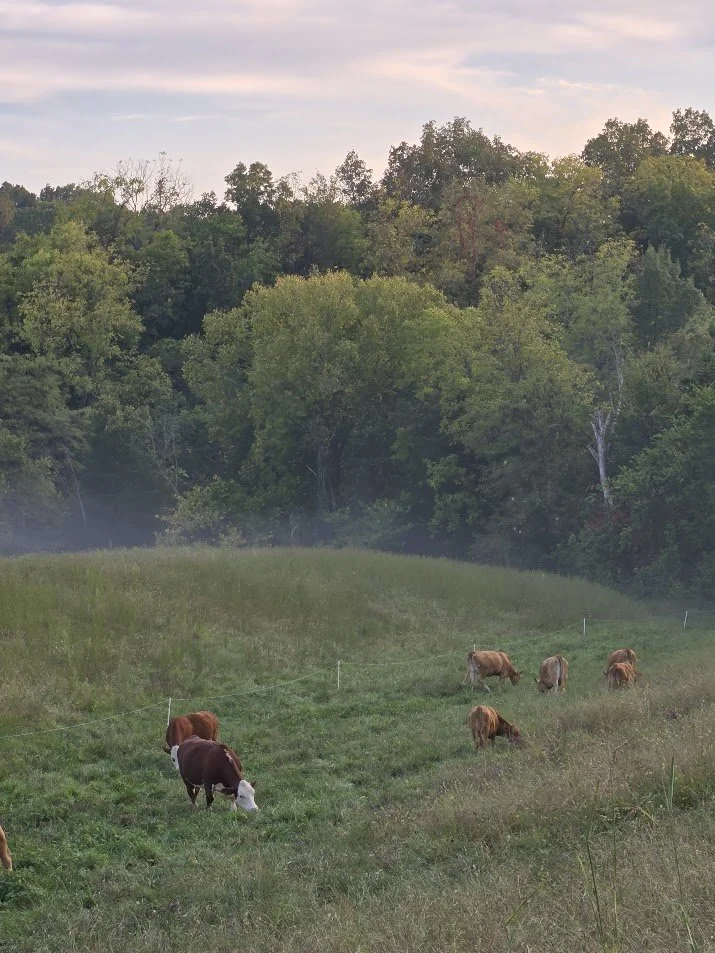
Rotational grazing has become a trend in recent years due it’s myriad of benefits for the environment, cattle, and producers alike. Adding rotational grazing to our pasture management plan allows us to actively combat issues like soil erosion, nutrient depletion, and drought.
Regenerative farms such as ourselves, have adopted rotational grazing as a scientific approach to improving our pastures. Healthy soil promotes nutrient dense pastures which provide peak nourishment for our cattle.
So, you might be asking yourself, what does this look like in action? We use a single strand of temporary fencing called “polywire” which is anchored to temprary “step-in” posts. This stystem allows us to concentrate our cattle in small areas to “mob graze” small sections at a time. The grass is grazed down to roughly 8 inches, which allows the grass to recover rapidly between grazes. This step also ensures that soil is not left bare and vulnerable to erosion. Using this method also allows the microorganisms to remain protected by a “living mulch” which boosts our fertility and keeps the soil food web alive.
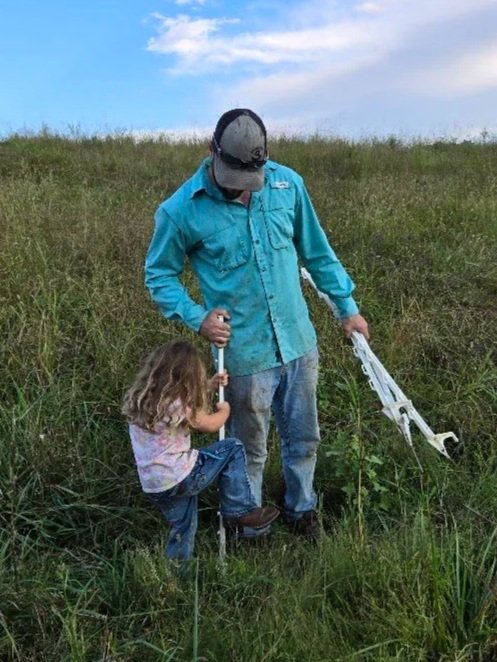
Rotating cattle gives even our littlest helpers a chance to participate.
Another benefit of rotational grazing is the reduced need for synthetic inputs. By strategically managing our cattle in a rotational grazing model, we are able to concentrate organic sources of nitrogen (manure) to fertilize our pastures efficiently. Manure is evenly dispersed throughout our pastures with each rotation. This greatly reduces demand for synthetic fertilizer.
Please feel free to access the footer below to contact us with any questions or comments related to this week’s blog post!
